

Doesn’t it sound like a teacher’s dream to be able to break free from the limits imposed by the institutional framework and by their own professional practice? This is what the “Dragon’s Dream” approach, a collaborative project management method, offers. Geeks for Education participants used it to imagine and plan their ideal educational project.
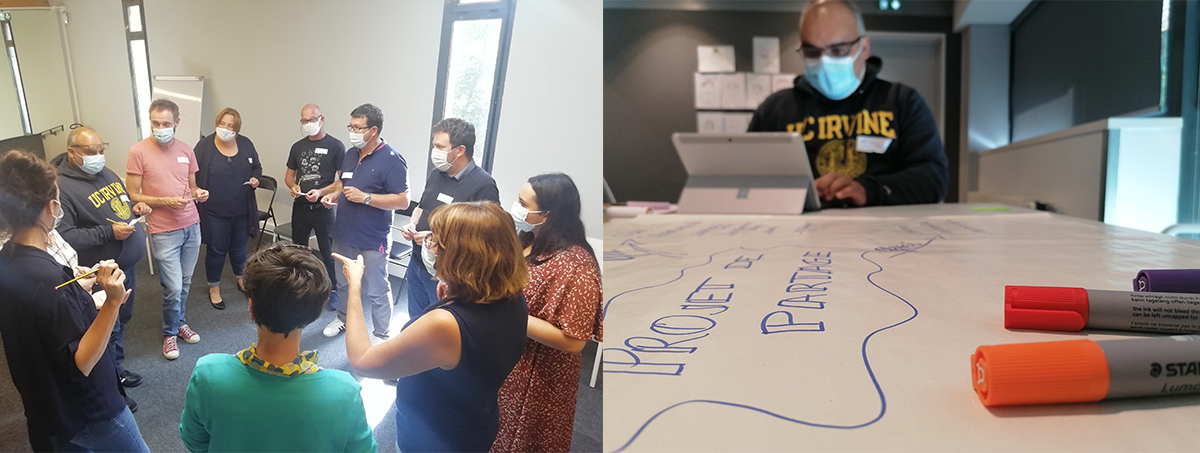 Following the May 2021 workshops, the Lille Geeks met on Thursday afternoon, September 23, at Centrale Lille for a workshop focused on the development of innovative and inclusive practices around digital and STEM fields. Based on the “Dragon’s Dream” methodology, teachers and teacher-researchers, educators from Lille social centres, secondary school teachers and Fablab technicians were able to identify the strengths and limitations of their own pedagogical methods, for themselves as well as for the learners, while reflecting on ways to overcome these obstacles.
By leaving room for imagination, while considering the knowledge and skills of each group, they were able to dream up their ideal project for the benefit of learners. The collective construction of an innovative model progresses thanks to the sharing of practices.
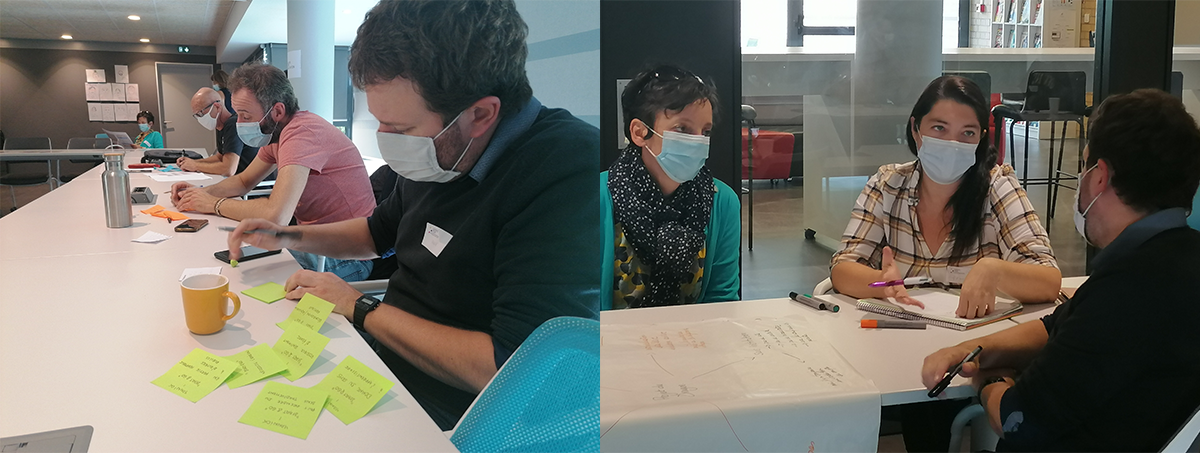 Yannick Dusch, a lecturer at Centrale Lille, explains: “When we teach, we all have frustrations at times, we all want to be as efficient as possible in this activity and this is an opportunity to identify good practices that will allow us to be more efficient, to have more time to do things, to transmit better, and to have happier students”.
The dream will soon become reality, as the objective is now to be able to transpose these conceptual models to training courses, and to enable teachers to use innovative, transdisciplinary, and inclusive teaching tools, which are at the heart of the Geeks for Education project.
Here is a video of this half-day event which was rich in exchanges: video link.
The next stage of the project will take place at the beginning of November 2021 when the first joint training week of the “Geeks for Education” project will be held in Portogruaro and Veneto in Italy. This training will bring together teachers and educationalists from the 7 partner countries who will have to become accustomed to the methodological framework of the project and prepare the implementation of the activities in each partner country.